
Navigating the Complex Landscape of 5G Infrastructure Deployment

Modern smart city infrastructure powered by 5G technology and IoT-enabled systems
The telecommunications industry stands at a pivotal moment as 5G technology promises to revolutionize connectivity, enabling everything from autonomous vehicles to smart cities. However, the path to widespread 5G deployment is fraught with complex challenges that require strategic planning, expert consultation, and innovative solutions.
Key Challenges Covered in This Article
- Spectrum allocation and management complexities
- Small cell deployment and site acquisition challenges
- Backhaul infrastructure requirements and solutions
- Regulatory and permitting obstacles at multiple levels
- Strategic approaches for successful deployment
The Promise and Complexity of 5G Networks
Understanding why 5G represents both unprecedented opportunity and unprecedented challenge
5G technology represents more than just faster internet speeds—it's the foundation for the next generation of digital innovation. With download speeds up to 100 times faster than 4G, ultra-low latency of less than one millisecond, and the capacity to connect millions of devices per square kilometer, 5G networks will enable transformative applications across industries.
However, achieving these capabilities requires a fundamentally different infrastructure approach compared to previous generations of wireless technology. While 4G networks could rely on large cell towers spaced several miles apart, 5G's higher frequencies and shorter wavelengths demand a dense network of small cells, often requiring installations every few hundred meters in urban areas.
5G networks require approximately 10 times more infrastructure points than 4G networks to achieve optimal coverage and performance in dense urban environments.
Critical Infrastructure Challenges in 5G Deployment
The technical, regulatory, and logistical hurdles that infrastructure developers must overcome
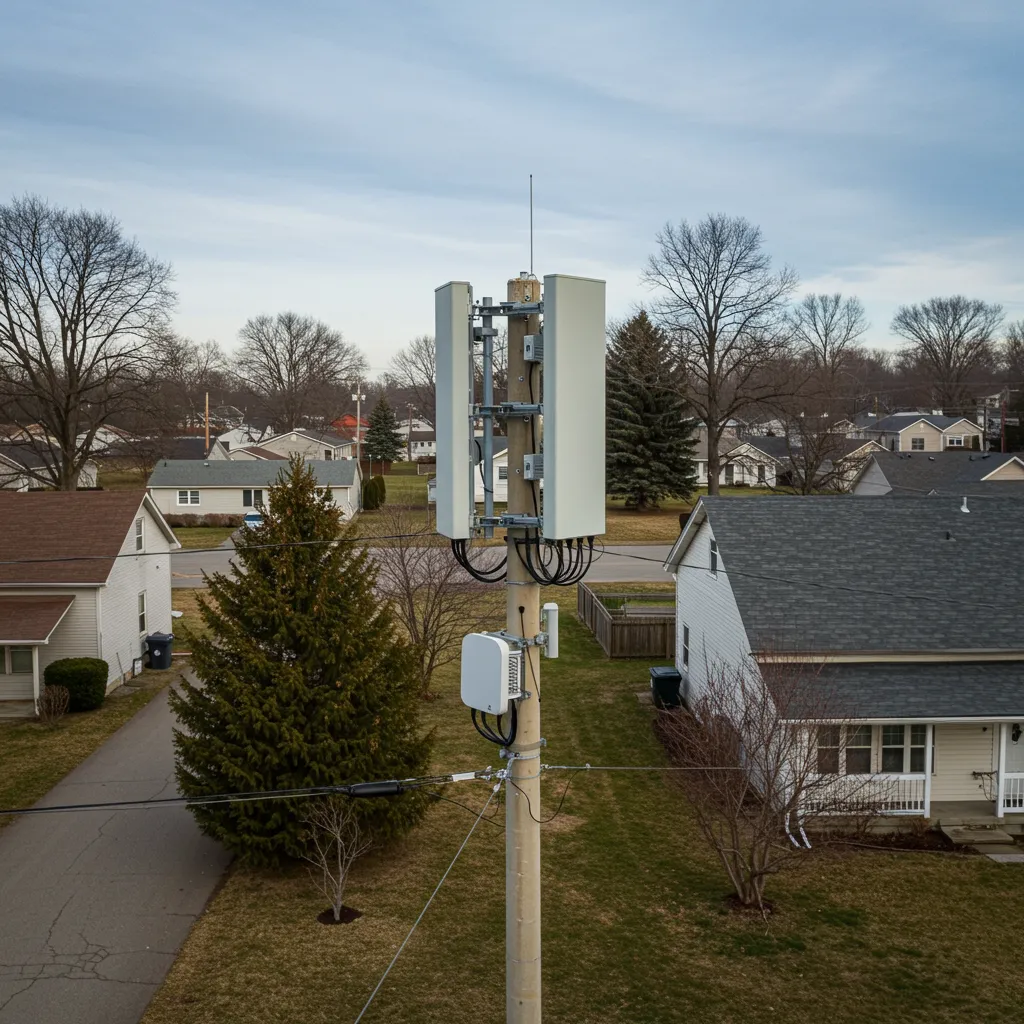
Municipal wireless infrastructure showing small cell deployment in urban environments
Spectrum Allocation and Management
One of the most significant challenges facing 5G deployment is spectrum availability and allocation. Unlike previous generations that primarily operated in lower frequency bands, 5G utilizes three distinct spectrum ranges:
5G Spectrum Bands and Characteristics
- Low-band (below 1 GHz): Excellent coverage but limited capacity improvements
- Mid-band (1-6 GHz): Optimal balance of coverage and capacity
- High-band millimeter wave (24-40 GHz): Highest speeds but requires dense deployment
Each spectrum band presents unique deployment considerations. Mid-band spectrum provides the optimal balance of coverage and capacity but is often heavily congested with existing services. High-band millimeter wave spectrum delivers the highest speeds and capacity but requires dense infrastructure deployment due to limited propagation characteristics.
Navigating spectrum acquisition, coordinating with regulatory bodies, and managing interference issues requires specialized expertise that many infrastructure developers lack internally. This is where strategic consulting becomes invaluable, helping organizations develop comprehensive spectrum strategies that align with their coverage objectives and budget constraints.
Small Cell Deployment Complexity
The backbone of 5G networks lies in small cell technology—low-power base stations that provide coverage over smaller geographic areas. While this technology enables the high-capacity, low-latency performance that defines 5G, it also creates unprecedented deployment challenges.
Site acquisition for small cells involves navigating complex relationships with property owners, municipalities, and utility companies. Each small cell installation requires careful consideration of zoning regulations, aesthetic requirements, and structural engineering constraints.
Successful small cell deployment requires a multi-disciplinary approach involving RF engineers, site acquisition specialists, regulatory experts, and community relations professionals. Key considerations include:
- Conducting comprehensive RF propagation studies to optimize site locations
- Developing standardized installation procedures to reduce deployment costs
- Establishing relationships with key stakeholders including municipal authorities
- Implementing advanced project management systems for tracking progress
- Ensuring compliance with all applicable regulations including environmental standards
Furthermore, the sheer volume of small cell sites required for comprehensive 5G coverage creates logistical challenges that can overwhelm traditional deployment processes. Managing hundreds or thousands of individual site installations requires sophisticated project management capabilities and coordination across multiple vendors and contractors.
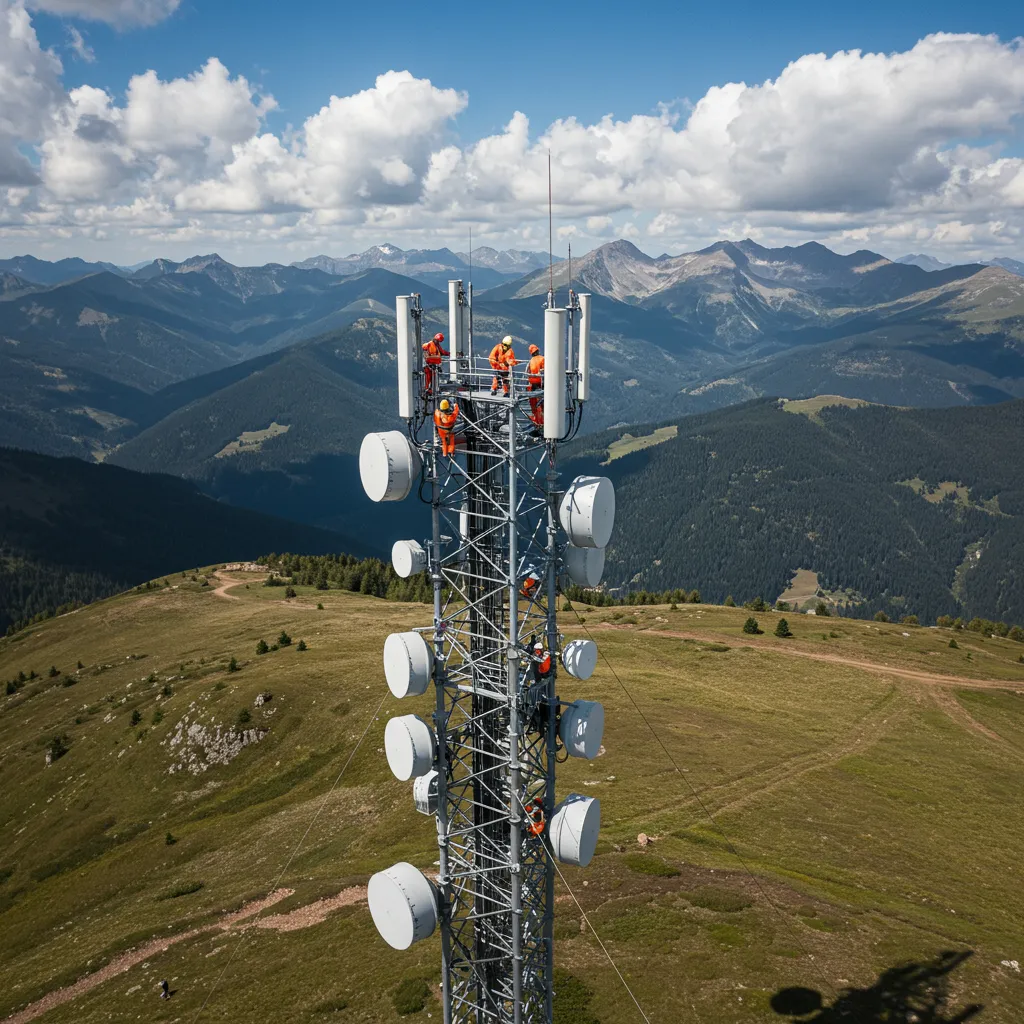
Vertical infrastructure construction showing antenna installation for enhanced wireless coverage
Backhaul Infrastructure Requirements
Every 5G cell site, whether macro or small cell, requires robust backhaul connectivity to function effectively. The high data throughput capabilities of 5G place enormous demands on backhaul infrastructure, often requiring fiber optic connections capable of supporting multi-gigabit data rates.
In many markets, existing backhaul infrastructure is inadequate to support 5G deployment at scale. This creates a chicken-and-egg problem: 5G deployment requires extensive fiber infrastructure, but the business case for fiber deployment often depends on 5G services generating sufficient revenue to justify the investment.
Developing cost-effective backhaul strategies requires careful analysis of existing infrastructure assets, evaluation of alternative technologies such as microwave and millimeter wave point-to-point links, and strategic partnerships with fiber infrastructure providers.

Construction of fiber optic infrastructure supporting 5G backhaul requirements
Regulatory and Permitting Challenges
Navigating the complex web of federal, state, and local regulations
Federal Coordination Requirements
The deployment of 5G infrastructure involves multiple layers of regulatory oversight at federal, state, and local levels. The Federal Communications Commission (FCC) regulates spectrum allocation and interference coordination, while other federal agencies oversee environmental compliance, aviation safety, and historic preservation requirements.
Navigating federal regulatory requirements requires understanding complex technical standards, environmental assessment procedures, and coordination processes with multiple agencies. The National Environmental Policy Act (NEPA) review process alone can add months to deployment timelines if not properly managed from the outset.
State and Local Regulatory Complexity
Perhaps even more challenging than federal oversight is the patchwork of state and local regulations that govern 5G infrastructure deployment. Each jurisdiction may have different zoning requirements, permit processes, and aesthetic standards that must be satisfied before infrastructure installation can proceed.
The 2018 FCC ruling on small cell deployment attempted to streamline local approval processes by establishing shot clocks for permit reviews and limiting local authority to regulate small cell installations. However, significant variations in local implementation of these rules continue to create deployment challenges.
Strategic Solutions for 5G Infrastructure Success
Proven approaches that help infrastructure developers overcome deployment challenges
Comprehensive Planning and Stakeholder Engagement
The complexity of 5G deployment demands a comprehensive planning approach that considers all stakeholder perspectives from the earliest stages of project development. This includes not only technical and financial considerations but also community impact, regulatory compliance, and long-term network evolution requirements.
Effective stakeholder engagement involves educating community leaders about 5G technology benefits, addressing concerns about health and safety, and demonstrating commitment to responsible infrastructure development.
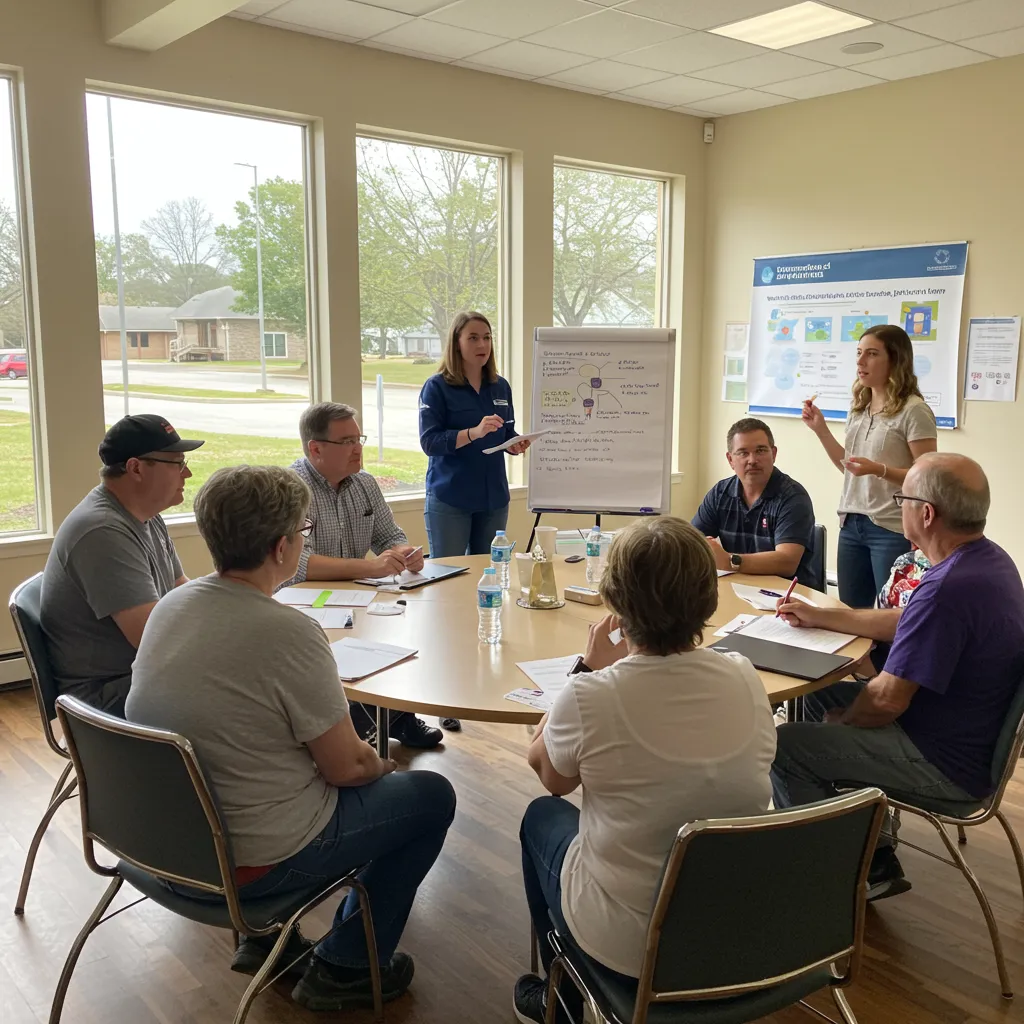
Community engagement meeting discussing broadband infrastructure benefits and addressing concerns
Public-Private Partnership Models
Many successful 5G deployments leverage public-private partnership (PPP) models that align public sector infrastructure goals with private sector technical expertise and financial resources. These partnerships can take various forms, from simple site leasing agreements to comprehensive infrastructure sharing arrangements.
Well-structured PPPs can provide municipalities with enhanced connectivity services while reducing the financial burden on private sector developers. For infrastructure developers, PPPs can provide access to public assets such as utility poles, traffic signals, and building rooftops that might otherwise be difficult or expensive to secure.
Public-private partnerships in 5G infrastructure have shown 30-40% cost savings compared to traditional deployment models while accelerating deployment timelines by an average of 18 months.

Public-private partnership meeting between government officials and infrastructure providers
Technology Integration and Future-Proofing
5G infrastructure deployment must consider not only current requirements but also future technology evolution. Network slicing capabilities, edge computing integration, and Internet of Things (IoT) device support will drive different infrastructure requirements as 5G networks mature.
Successful deployment strategies incorporate flexible infrastructure designs that can accommodate emerging technologies without requiring complete infrastructure replacement. This includes deploying fiber networks with excess capacity, designing small cell installations that can support equipment upgrades, and implementing network architectures that can evolve with changing traffic patterns and service requirements.

Strategic broadband planning using advanced GIS software and network data visualization tools
The Path Forward: Strategic Consulting for Complex Infrastructure
The challenges facing 5G infrastructure deployment are too complex for any single organization to navigate alone. Success requires bringing together expertise in RF engineering, regulatory compliance, project management, financial analysis, and stakeholder engagement—capabilities that few organizations maintain internally.
Why Strategic Consulting Makes the Difference
- Access to specialized expertise across multiple technical domains
- Proven methodologies for managing complex deployment projects
- Experience navigating regulatory requirements at all levels
- Established relationships with key stakeholders and vendors
- Ability to optimize network designs for current and future requirements
At Vector Infrastructure Group, we understand that every 5G deployment project is unique, with distinct technical requirements, regulatory environments, and stakeholder considerations. Our approach combines deep technical expertise with practical experience in project management and stakeholder engagement to help infrastructure developers achieve their connectivity goals efficiently and cost-effectively.
The future of connectivity depends on successful 5G infrastructure deployment, but the path to that future requires careful navigation of complex technical, regulatory, and business challenges. With the right strategic approach and expert guidance, infrastructure developers can overcome these challenges and build the networks that will power the next generation of digital innovation.
As we move forward into an increasingly connected world, the organizations that succeed in 5G deployment will be those that recognize the complexity of the challenge and invest in the expertise necessary to navigate it successfully. The opportunity is significant, but so are the challenges—making strategic planning and expert consultation not just valuable, but essential for success.